

LGBTQ+ Affirming Therapy in North Carolina
Online therapy for queer and trans clients across the Triangle and throughout NC — where your identity is the starting point, not something we have to work around.
Serving the Triangle, Charlotte and throughout North Carolina via online therapy.
You shouldn't have to vet your therapist before you can actually use them.
Finding affirming care as an LGBTQ+ person in North Carolina has its own particular exhaustion.
You scan the website for signals. You look for whether they actually list trans clients, or if "affirming" just means they won't say anything overtly wrong. You wonder if you'll spend the first few sessions explaining what your identity means before you can get to the actual work. You brace a little — especially in a state where the political climate has made it clear that your existence is still contested.
That's not how therapy is supposed to feel.
My practice is explicitly LGBTQIA2S+ affirming — not as a marketing badge, but as the foundation of how I work. You won't need to educate me. You won't need to soften your experience. You won't need to wonder if I'm quietly confused by your relationship structure or your pronouns. We start from a place of genuine understanding and get to work.
What brings LGBTQ+ clients to therapy in NC
Queer and trans people come to therapy for every reason anyone else does — anxiety, burnout, relationship stress, grief, life transitions. But the texture of those experiences is often shaped by identity in ways that a non-affirming therapist can miss entirely.
Minority stress and anxiety. Living as an LGBTQ+ person in North Carolina means navigating real, ongoing threats — to rights, to safety, to belonging. The hypervigilance that comes from that isn't irrational. It's a nervous system response to actual conditions. Somatic therapy helps you find regulation without minimizing the context your body is responding to.
Gender dysphoria and transition-related stress. Whether you're questioning your gender, actively transitioning, or years into your journey, the internal and external pressures are significant. I work with clients through every stage — including the grief, the joy, the family dynamics, and the healthcare navigation that comes with it.
Gender-affirming care letters. I am trained and qualified to write letters supporting gender-affirming medical care — including hormone therapy and surgical procedures. If you need a therapist who can support your transition medically as well as emotionally, I can help with both.
Coming out — at any stage. Coming out isn't a single moment. It's ongoing: to new people, new employers, new partners, sometimes to yourself again in new ways. The anxiety surrounding it is real, workable, and something I understand well.
Religious and family trauma. For many LGBTQ+ North Carolinians, the wound of rejection came from the people and institutions that were supposed to be safe. The intersection of queer identity and religious upbringing — or family rejection — is a very specific kind of pain that needs careful, informed holding. This is a significant part of my work.
Internalized shame. Years of subtle and not-so-subtle messaging that something about you is wrong, too much, or needs to be fixed doesn't just dissolve with community and affirmation. Sometimes it needs direct therapeutic processing at the level where it actually lives — in the body, not just the mind.
Relationship and family dynamics. Chosen family, polyamorous structures, queer relationship patterns, navigating a partner's transition, family estrangement — your relational life is complex and valid, and it belongs in the therapy room exactly as it is.
Gender-affirming care letters in North Carolina
I am trained to provide letters supporting access to gender-affirming medical care, including:
Letters for hormone therapy (HRT)
Letters for gender-affirming surgeries
Documentation supporting legal name and gender marker changes
Getting a gender-affirming care letter can feel like another barrier in an already exhausting process. In my practice, it's part of a therapeutic relationship — not a standalone transaction. If you're seeking this kind of support, we can discuss what that looks like during your free consult.
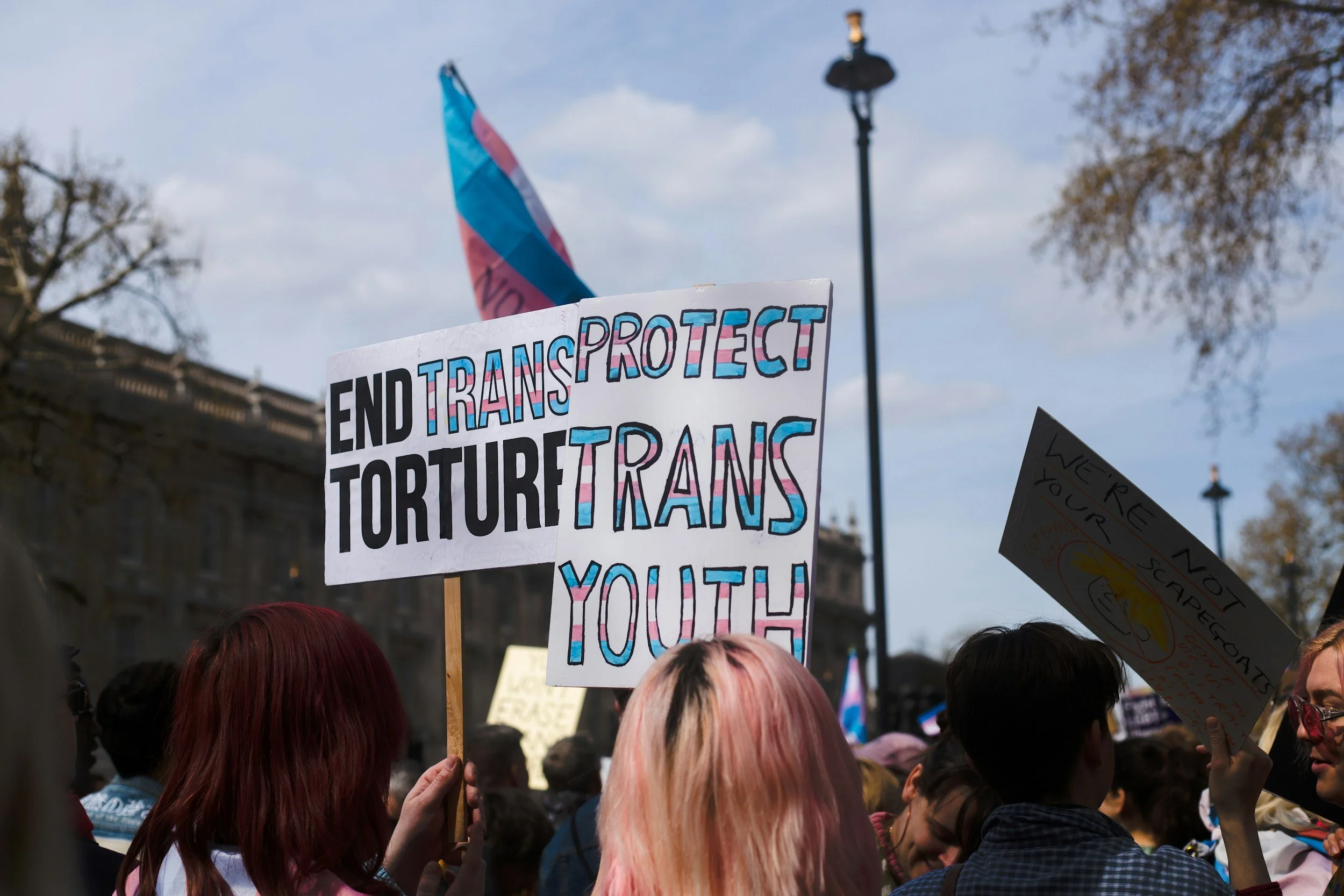
What makes this work different — a somatic approach to LGBTQ+ healing
Most people find me when talk therapy has helped them understand their experience but hasn't shifted how it lives in their body.
That gap is especially common for LGBTQ+ clients. A lot of what we're working with is stored at the nervous system level — the chronic vigilance of moving through a world that isn't fully safe, the embodied weight of dysphoria, the way shame gets lodged in physical sensation long after conscious thought has moved on.
Somatic therapy works directly with those stored patterns. Not by forcing you to re-live difficult experiences in detail. But by gently helping your nervous system complete what got interrupted — the stress responses that never fully discharged, the grief that never had space, the fear that learned to live in your body as a permanent low-level hum.
This is body-based work that is specifically suited to identity-related trauma and minority stress. And it works beautifully online — you don't need to be in the same room for your nervous system to shift.
Who I work with
I work with LGBTQ+ adults across North Carolina, including:
Gay, lesbian, and bisexual individuals navigating anxiety, relationships, identity, and the specific stress of living in NC right now
Queer individuals from religious backgrounds navigating the intersection of faith and identity
Neurodivergent queer people — queerness and neurodivergence often intersect in ways that deserve informed, integrated care
Trans and nonbinary people exactly where you are — questioning, pre-transition, mid-transition, post-transition, or outside that framework entirely
LGBTQ+ people of color holding multiple marginalized identities
Queer people who have tried therapy before that wasn’t actually affirming and even harmful.
I see clients online throughout all of North Carolina — Raleigh, Durham, Chapel Hill, Charlotte, Asheville, Wilmington, Greensboro, Winston-Salem, and everywhere in between.
What "truly affirming" looks like in practice
“She knew exactly when to push and when to pull back, and was careful to provide a process that was safe and inclusive for myself as a neurodivergent and queer individual."“
Affirming therapy is more than correct pronouns (though of course I use them). It means:
Your relationship structure is never questioned or pathologized. Whether you're partnered, polyamorous, single by choice, or navigating something that doesn't fit a label, we start from respect.
Your gender identity is not up for debate. I don't apply a "are you sure?" lens to identities you know. If you're exploring, we explore. If you're certain, we work from certainty.
North Carolina's political climate is treated as real context, not catastrophizing. The ongoing legislative targeting of LGBTQ+ rights in this state is a legitimate stressor. We work with that reality, not around it.
Your intersecting identities matter. Queer and a person of color. Queer and neurodivergent. Queer and religious. Queer and disabled. These intersections shape how you move through the world and they belong in therapy.
"My work with Katie served as the most foundational piece of accepting myself where I am at, and what emotions come with."
"I feel better equipped to show up for myself and cannot imagine where I would be without her."
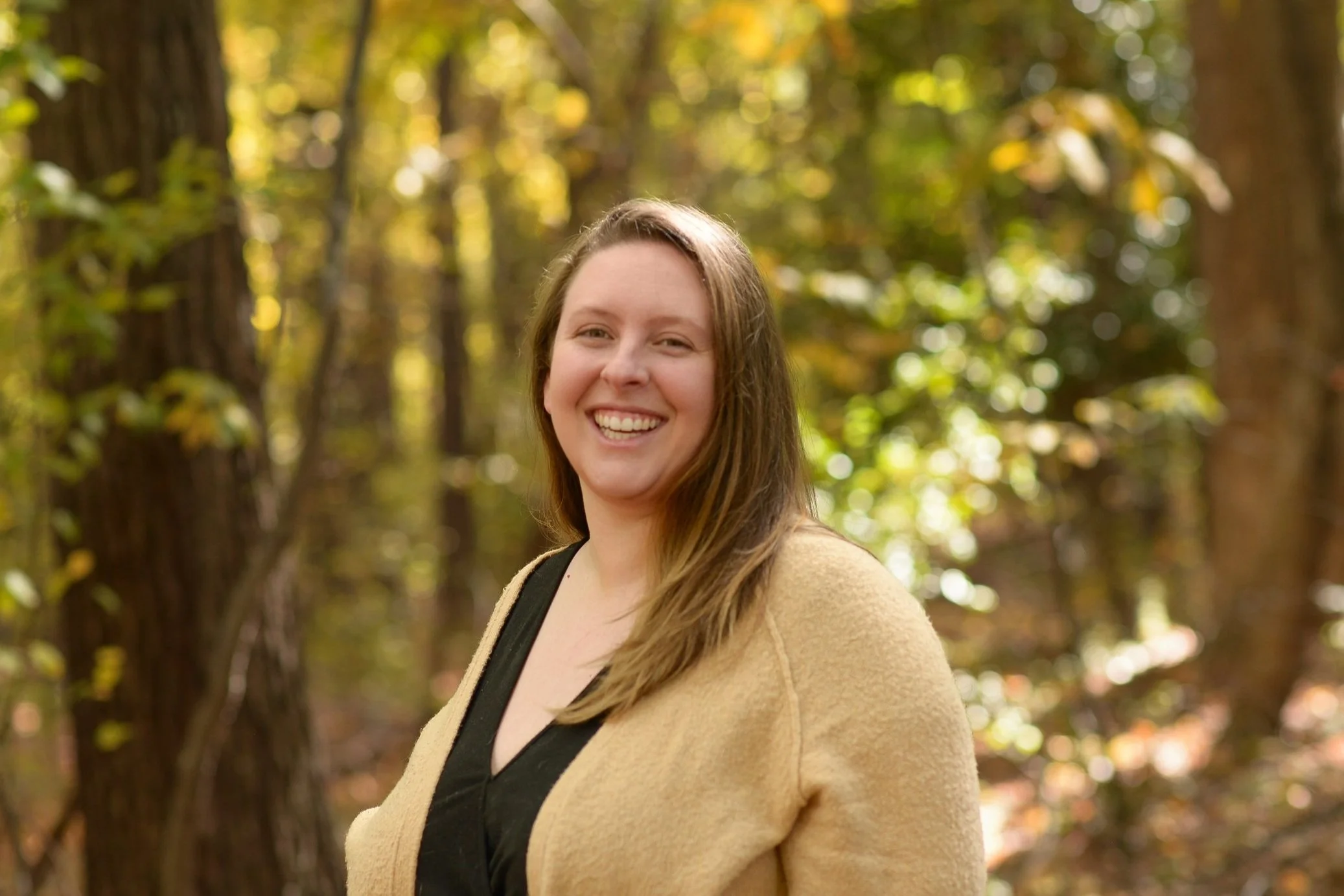
About Katie, your North Carolina Therapist
Katie Hargreaves, LCSW, LCAS, is a somatic therapist licensed in North Carolina with over 12 years in mental health and more than 4,000 therapy sessions. She is a member of the LGBTQ+ community and has worked with queer and trans clients throughout her career — bringing genuine experience, not just an open door policy.
She is trained to provide gender-affirming care letters and has deep experience with religious trauma, minority stress, gender dysphoria, and identity-related anxiety.
Her therapeutic approach integrates somatic therapy, polyvagal-informed nervous system regulation, breathwork, and parts-based work. All sessions are online, 75 minutes, and available to clients throughout North Carolina.
Learn more about Katie | FAQs | Learn more about Online Therapy in NC | Learn about Gender Affirming Care Letter in NC | Learn about Finding an LGBTQ+ Affirming Therapist
How to get started
Here's how it works:
Step 1
Book a free 15-minute consult. We talk about what's bringing you to therapy, what you want your life to look like, and whether we're a good fit.
Step 2
Schedule your first session. 75 minutes, online, from anywhere in North Carolina.
Step 3
Start the actual work. Not just talking about your experience. Shifting how it lives in your body.

FAQs about LGBTQ+ Therapy in North Carolina
-
No. Many clients are still understanding themselves better, not out to everyone in their life, or questioning. You don't need a fully formed or publicly visible identity to access affirming care. Whatever stage you're in is valid.
-
This is worth taking seriously. Sessions are HIPAA-compliant using a telehealth platform. It can be more private in that no one will see you at my office or entering my office. That becomes really reassuring to a lot of people.
If you don’t feel comfortable joining from you, you can join from your car, earbuds in a private space, anywhere that feels safe. We can also talk through specific privacy concerns in your consult.
-
Yes. I am trained to write letters supporting hormone therapy, gender-affirming surgeries, and related gender-affirming medical care. This can be part of a therapeutic relationship,or a standalone service. Let's talk about what you need in your consult.
-
Yes — pre-transition, mid-transition, post-transition, or not sure about transition at all. I also work with clients who are exploring their gender identity without any particular destination in mind.
-
Yes. Your relationship structure is not pathologized here. It's context. I’ve worked with people in polyamorous and ethical non monogamy dynamics. Additionally, people who are into kink or do sex work are welcome and celebrated here.
-
I am private pay. Sessions are $225 for 75 minutes. I provide superbills for potential out-of-network reimbursement, and accept HSA/FSA cards. If you'd like to explore out-of-network benefits, we can discuss that during your consult.
-
Yes — I see clients throughout all of North Carolina via online therapy. Wherever you are, if you have a private space and reliable internet, we can work together.
Katie Hargreaves, LCSW, LCAS | Licensed in North Carolina | LGBTQIA2S+ & BIPOC affirming | Gender-affirming care letters available hello@katiehargreavestherapy.com | 323-208-9182
Ready to start therapy?
Areas also served: Raleigh | Chapel Hill | Durham | Charlotte | Online therapy in Charlotte | Online Therapy in North Carolina | View our Chapel Hill Google profile